
In the theme of AI as a Consultant, identify and protect your core competencies, intellectual property, and skills. If AI can undertake every job function in your company, it can do the same for your competitors.
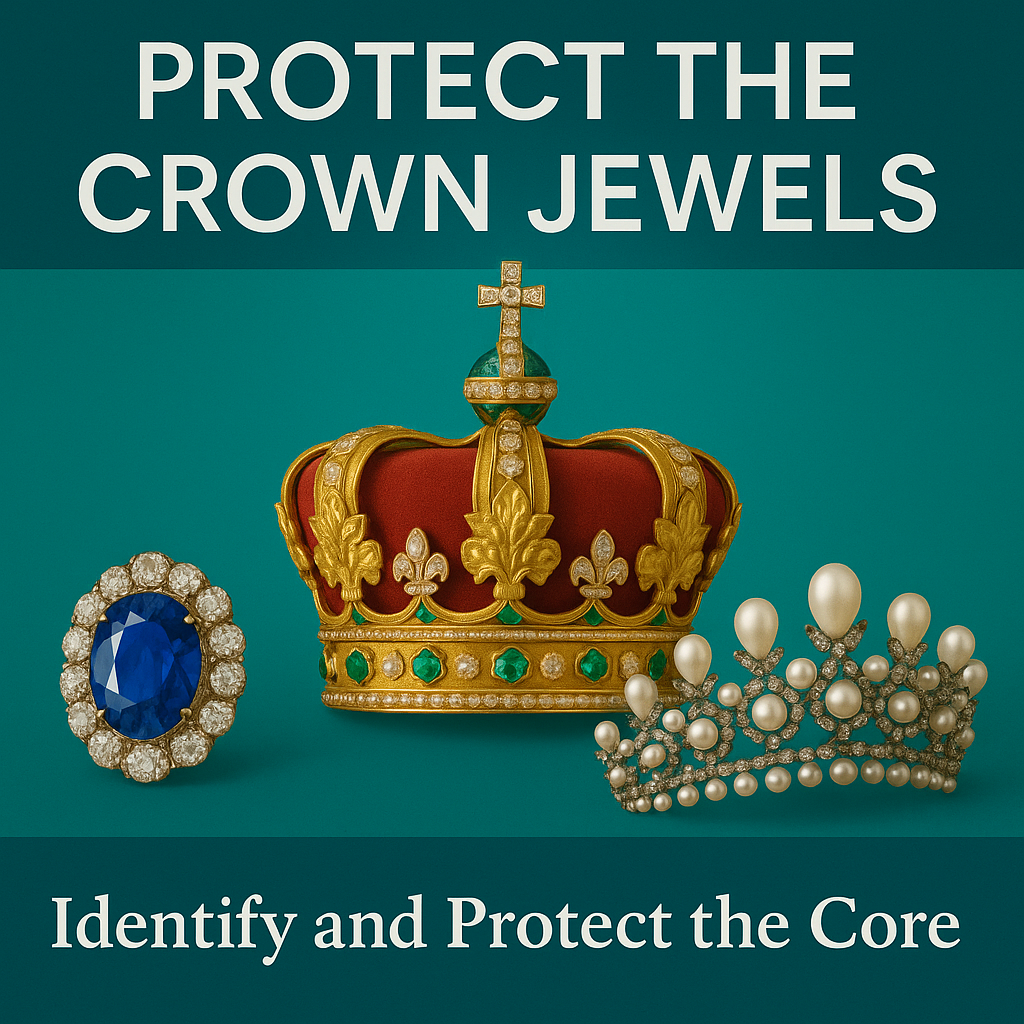
This a fitting week to discuss protecting jewels, considering the theft in Paris.
In my career, I have worked as a consultant, worked with consultants, and managed consultants. The companies most successful with consultants protected a core which could only be performed by trusted staff. The consultants were closely integrated as partners with open access to the company. Still, it was always recognized that they were not staff and tomorrow could be working for a competitor. Even if we could trust them to protect use according to NDA, they had developed skills which could be employed against us. In the very least, a company must have a competency in managing its consultants. A company I worked for in which the consultants ran entire departments was like a ship without a rudder.
The companies that will be successful with AI will identify their core area. It might be technical, like securing their databases. It could be critical intellectual property. Marketing strategy. Expertise with AI management. It might be as simple as branding content.
These posts come with artwork. It is not my core competency and I have completely outsourced it to AI. The gems that you see are representations of the jewelry stolen from the Louvre this week. It would take me an hour to create a similar product, but it would not be of the same quality. This graphic took three iterations, but only a matter of minutes, in the background, while I typed this post.
The text in this post, on the other hand, is my own, with an AI grammar check. It is not Shakespeare. It is my voice and my thought process, which are my value proposition in these posts.
As an aside, I am using a productivity trick that I learned from @David Sperry and @Lauren Oliphant during last week's OpenAI hackathon. My image generator is encapsulated in a GPT. I can call it from any chat by typing the at sign "@" and starting to type the name of the GPT. It will autocomplete. As the GPT has the style guide and instructions, I simply provide a title, caption text, and a prompt on the desired graphical design elements. I have found that if you want to keep the GPT session as a chat, the first prompt must be text only. Do not employ the GPT until the second prompt in the chat.
If you would like the details of the GPT, please leave me a comment.